

Independent Life
Personal Finance
Judgment for real financial decisions.
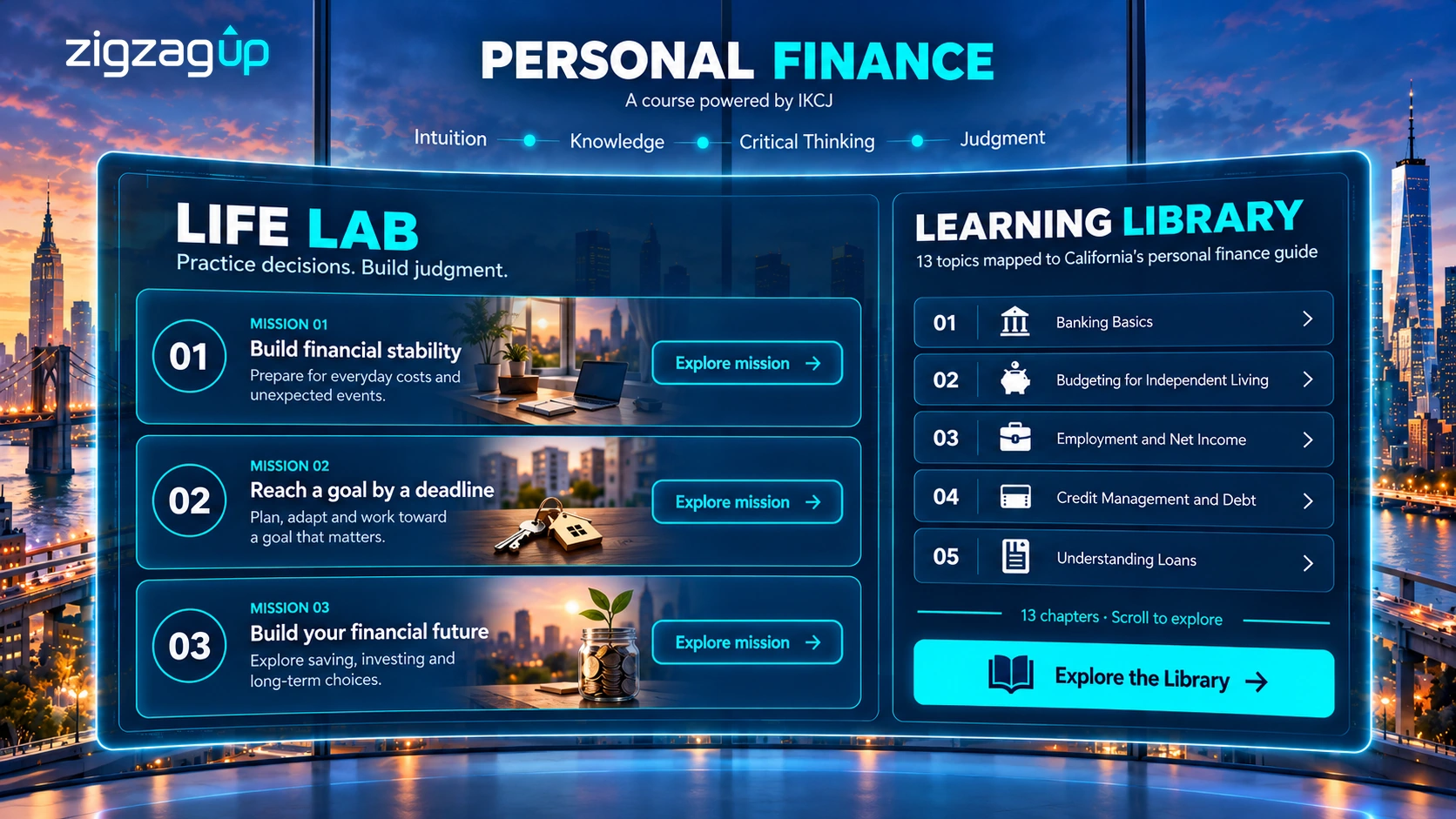
One course. Two connected learning paths.
Start with a topic.
Learning Library
Explore financial concepts, check understanding, and practice applying knowledge.
Start with a goal.
Life Lab
Three missions connect all 13 topics through financial goals, changing circumstances, and decisions with consequences.
Start in either. Move between both.
- Achieve financial stability.
- Reach a goal by a deadline.
- Build your financial future.
Personal finance puts reasoning into practice: applying knowledge independently when priorities compete and financial choices have consequences.
A look inside ZigZagUp
Product video coming soon
Evaluation objective
What Personal Finance aims to validate
Can learners move beyond remembering financial concepts to making and explaining independent financial decisions when goals, constraints, and circumstances change?